
How to Help a Child Focus

Why "just focus" does not work
Many parents ask how to help a child focus, especially when simple reminders are not working.
If “just focus” worked, most of us wouldn’t be having this conversation.
Parents say it.
Teachers say it.
Children hear it, again and again.
And yet, the work still doesn’t begin.
This is because focus is not a simple instruction.
It relies on attention, working memory and self-regulation, skills that are still developing and often need clear, structured support.
What helps is not more pressure.
It is clear, manageable structure.
Simple ways to help a child focus
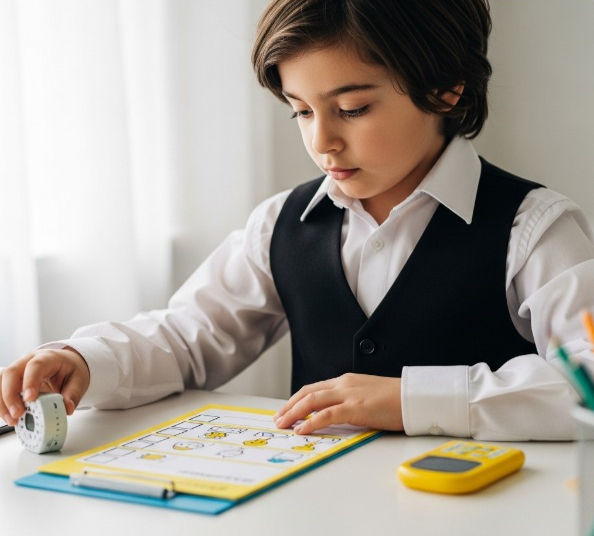
Start with a quick brain dump. Give the child one minute to say or write everything on their mind. For example: “Before we start, tell me or jot down all the things you’re thinking about.” This helps clear the mind, so starting the work feels easier.
Try a “one-song start.” Ask the child to work only until one song finishes. For example: “Let’s just do the first 3 sums while this song is playing.” It feels small, easy, and less overwhelming so the child is more likely to begin.
Break tasks into small, visible steps.
Instead of “finish your work,” try “let’s do the first question together.” This supports executive function and task initiation.
Use visual timers or checklists. Instead of saying, “Finish your work,” show the child how long they need to work. For example: “Let’s work for 10 minutes—watch the timer,” or “Let’s tick off these 3 small tasks one by one.” When children can see time and progress, the work feels clearer and less overwhelming.
And finally, allow short, structured breaks. Attention improves when effort is balanced with recovery.
These are not shortcuts.
They are evidence-based ways to support attention and learning in a way that children can actually respond to.
When we shift from “try harder” to “let me show you how,” something changes. Children don’t just work more, they begin to feel calmer, more confident and more willing to try.
If your child is struggling with focus and learning, the right support can make daily tasks feel clearer, calmer and more manageable.
FAQ's
Why does my child struggle to focus on schoolwork?
It’s usually not about effort. Many children get stuck because the work feels too big or unclear.When focus skills are still developing, they need smaller steps, clear structure and a calm starting point, not more reminders to “just focus.”
How can I help my child focus at home without daily battles?
Start small. Much smaller than you think. Instead of “finish everything,” try “let’s just begin.”A short start, a simple routine and a clear end point can turn resistance into willingness.
Is poor focus always ADHD?
Not always. Focus can be affected by many things: learning gaps, overwhelm or difficulty getting started. What matters most is noticing the pattern early and giving the right kind of support.
Dyslexia Let's Read LLC
West Bay, Qatar
Disclaimer: Dyslexia let’s Read provides educational support only not therapy or diagnosis.


Comments